Damiana’s documented presence in Mesoamerican healing traditions
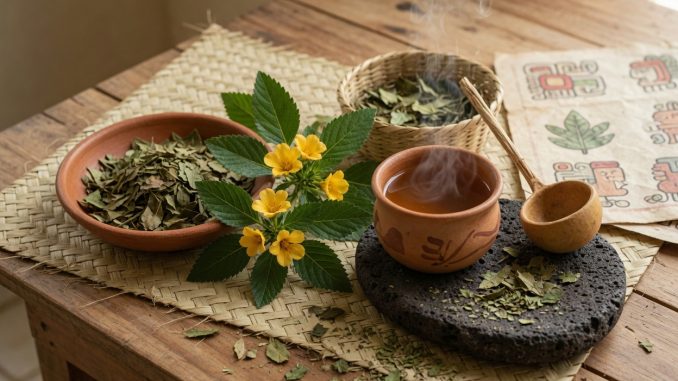
Damiana (Turnera diffusa) appears in modern herbal compilations as a plant of traditional use across parts of Mexico and nearby regions, and contemporary herbal resources catalogue its benefits, safety, and uses. When examining Aztec and Maya medicine specifically, damiana is best approached as part of a wider materia medica where aromatic shrubs were valued for reproductive, mood-related and ceremonial roles.
Ancient Mesoamerican practitioners integrated food, ritual and plant remedies into daily and ceremonial life; for background on the culinary and ritual contexts that help explain how herbs like damiana could be used alongside foods and offerings, see Aztec cuisine and foodways. This contextual link helps locate damiana within broader patterns of plant use rather than as an isolated therapeutic item.
Ethnobotanical signals: reported traditional functions and cultural placement
Ethnobotanical reports and modern herbal summaries commonly associate damiana with tonic roles for mood and reproductive health, as well as with mild stimulant or relaxant applications. Such associations come from oral tradition, colonial-era herbals and contemporary compilations that record local uses rather than controlled clinical trials.
In Aztec and Maya contexts, aromatic leaves and shrubs were often used in small doses, in infusions, or incorporated into ritual blends. Interpretations of damiana’s traditional roles should remain cautious: direct, detailed descriptions from primary Aztec or Classic Maya codices are limited, so much of our understanding rests on later ethnobotanical recording and on parallels with other Mesoamerican plant uses.
Cultivation, propagation and traditional harvesting practices
Turnera diffusa grows as a small woody shrub in regions with warm, often coastal climates. Traditional cultivation likely took advantage of well-drained soils and sunny sites where shrubs could be maintained near habitation zones for easy harvest.
Propagation in traditional settings would have relied on stem cuttings and selective transplanting rather than seed-based industrial production. Harvesters typically collected aromatic leaves when scent and flavor were most pronounced; drying was practiced to preserve material for year-round use.
Phytochemistry and how it informed medicinal properties
Modern phytochemical surveys of damiana identify aromatic volatile oils, flavonoid-type constituents and other secondary metabolites that contribute to scent, bitter taste and perceived effects. These constituents provide a plausible basis for the plant’s sensory impact and traditional applications as a nervine or tonic.
Ethnobotanical claims about damiana’s effects derive from these sensory and phytochemical properties rather than from standardized dosing. Contemporary herbalists reference these compounds when explaining traditional uses, while noting that individual preparations and potency vary considerably between wild-harvested and cultivated material.
Traditional preparations, common recipes, and smoking blends
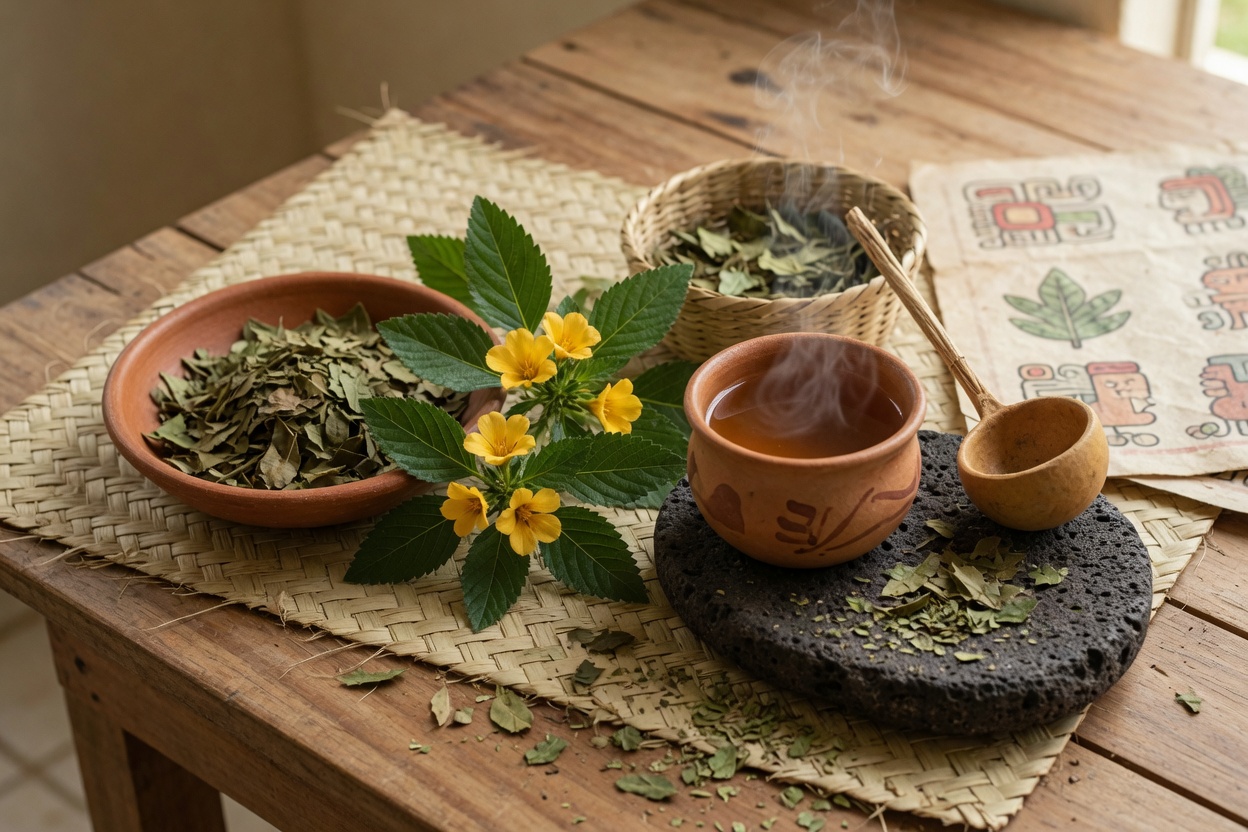
Across recorded practice, damiana was prepared in several straightforward ways: as a warm infusion of dried leaves, as an aromatic steam or fumigation, and in some regions blended with other herbs for smoking or sachets. These applications emphasize aroma and gentle systemic effects rather than concentrated pharmacological dosing.
When used in smoking blends with damiana, the leaves were primarily valued for scent and the perceived calming or warming qualities they imparted to a mixture. Traditional blends typically mixed damiana with locally available aromatic herbs to support ritual, social or ceremonial consumption.
- Infusion of dried leaves for a warm, aromatic drink
- Fumigation or steam for ceremonial aromatic use
- Dried leaf blends used in sachets or smoked mixtures
- Topical poultices less commonly recorded but noted in some regional reports
Medicinal uses, dosing context and modern practice
Historical accounts describe damiana more in functional terms (e.g., a calming or tonic herb) than as a precisely dosed medicine. Traditional dosing varied by community, form of preparation, and intended purpose, so modern users seeking to emulate traditional uses should proceed cautiously and respect local knowledge.
Contemporary herbal practice often treats damiana as a gentle botanical used in small amounts—typically as a tea or part of an herbal blend—rather than a concentrated extract. Because original Aztec and Maya usages were embedded within broader therapeutic systems, modern dosing should be guided by reputable herbalists and current safety guidance rather than assumed fixed historical regimens.
Safety, contraindications and combining damiana with other herbs
Both traditional sources and modern herbal compendia advise caution: pregnant and breastfeeding people are generally recommended to avoid many stimulating or aromatic tonic herbs unless under direct guidance from a clinician knowledgeable about traditional plant use. The same caution applies to damiana preparations.
Herbal combinations historically reflected local materia medica logic—pairing aromatic tonics with supportive nervines or carminatives for balanced effects. In modern practice, combining damiana in blends should account for potency, the route of administration (tea versus smoking), and potential interactions with medications. When in doubt, consult a qualified practitioner.
Practical guidance for home cultivation and respectful use
For growers and herbalists wanting to align contemporary use with traditional context, prioritize ethical sourcing, gentle cultivation, and accurate botanical identification (Turnera diffusa). Small-scale propagation by cuttings preserves local genetic lines and keeps plants available for ongoing community use rather than overharvesting wild populations.
Respectful use also means documenting community knowledge and acknowledging the limits of historical records. Where clear traditional instructions are lacking, favor low-dose, occasional preparations and seek guidance from experienced herbalists who work with Mesoamerican traditions. This conserves cultural context while minimizing risk in modern applications.