
Starting Damiana from seed or cuttings: which to choose and why it matters
If your goal is speed and predictable traits, cuttings will produce a bush that is genetically identical to the parent and typically establishes faster than seed-grown plants. Seed propagation is useful when you want to produce many plants or work with local seed sources, but it usually requires more time to reach a useful harvestable size.
Decide based on your timeline: take semi-ripe cuttings to expand a known stock, or sow seed when you want to trial genetic variety. Either route supports home cultivation, but the steps for success differ and are outlined below.
Germinating Damiana seed: practical protocol and common pitfalls
Use fresh, clean seed sown on a free-draining seed mix. Sow seeds on the surface or barely covered, keep the medium evenly moist (not waterlogged), and provide steady warmth and light; a warm windowsill or a propagation tray with bottom heat helps maintain consistent temperatures that favor germination.
Common mistakes include over-watering, which leads to damping-off, and burying seeds too deeply so light-dependent seeds fail to sprout. If seedlings appear spindly, increase light and reduce humidity slightly to promote stronger stems and better root-to-shoot balance.
For botanical context and authoritative species details consult the Turnera diffusa species page, which summarizes taxonomy and distribution that help explain why Damiana prefers warm, well-drained sites in cultivation.
Propagation from cuttings: materials and rooting method
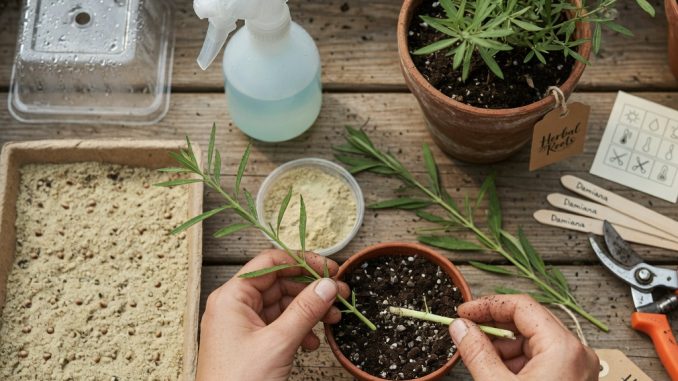
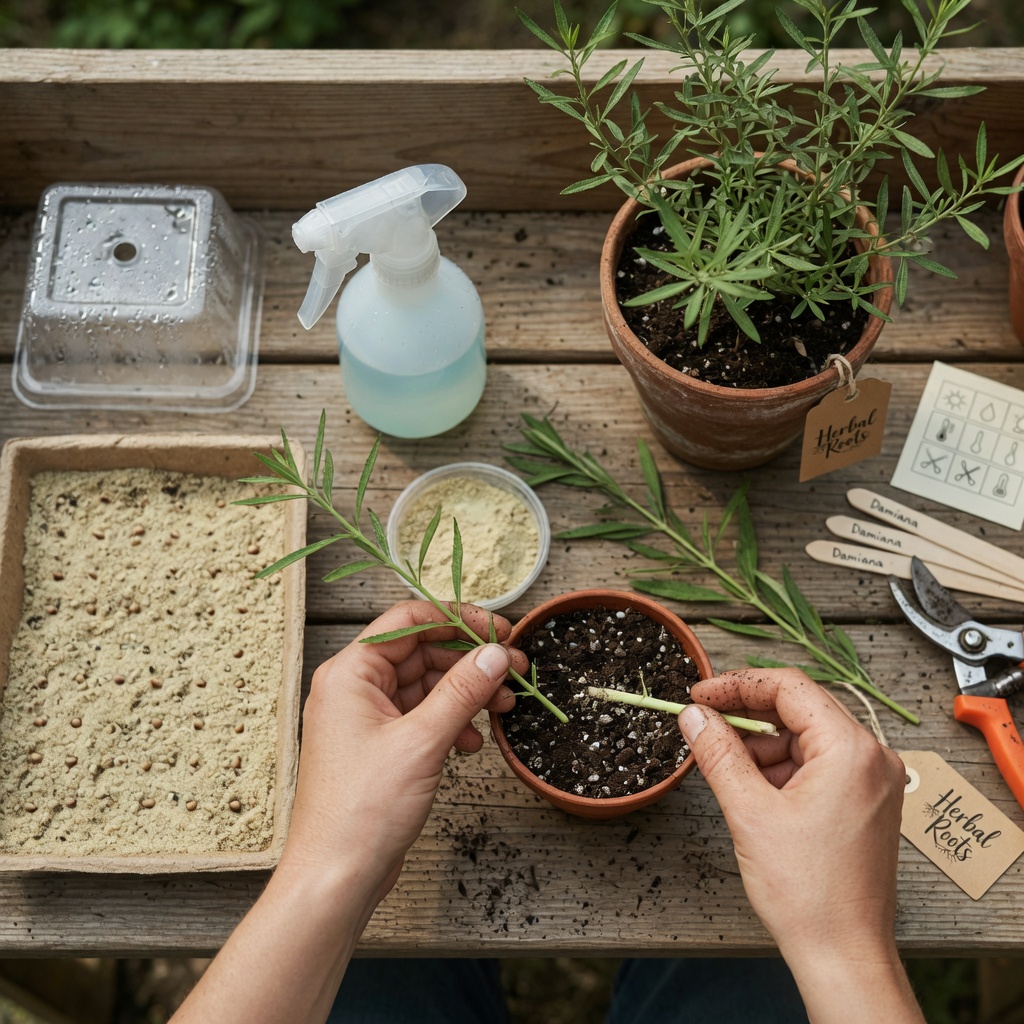
Take semi-hardwood cuttings of 4–8 inches with at least two nodes and remove the lower leaves to expose about an inch of bare stem. Use a sharp, sterile tool to make a clean cut, and if available dip the cut end briefly in a rooting hormone to improve success rates.
Insert cuttings into a porous, well-draining rooting medium such as perlite mixed with coarse sand or a light potting mix. Maintain high ambient humidity with a simple dome or plastic bag and give bright, indirect light until roots form; gentle bottom heat can accelerate rooting in cooler homes.
Cultivation: soil, light, watering, pruning and winter care
Damiana grows best in a light, well-draining medium and performs well in full sun to partial shade. When potting, choose a container with good drainage and a mix that dries a little between waterings; standing in water invites root problems.
Water moderately and allow the top soil to dry before rewatering—Damiana is not a swamp plant and tolerates brief dry spells. Prune regularly to encourage bushiness and harvestable leaf mass; light formative pruning in spring keeps plants compact and productive.
For those in cooler climates, grow Damiana in pots that can be brought indoors during cold weather. Protect plants from persistent low temperatures and reduce watering during a semi-dormant winter phase to prevent rot.
Harvesting, storage, phytochemistry notes, and safety
Harvest leaves when they are mature but still fresh and green, preferably in late morning after dew has dried. Strip leaves or take branch tips and dry them slowly out of direct sun in a warm, ventilated room to preserve aroma and active constituents.
Store dried leaves in airtight containers away from light and heat; properly dried and stored material keeps quality for many months. Ethnobotanical sources note a range of traditional uses for Damiana, and growers should respect safety guidance: start with small doses when trying preparations and consult reliable sources about interactions and contraindications before medicinal use.
- Propagation checklist: clean tools, fresh medium, high humidity for cuttings
- Cultivation checklist: well-draining soil, bright light, moderate water
- Harvest checklist: pick mature leaves, dry in shade, store airtight
A seasonal plan and troubleshooting for the first year
Begin seeds or place cuttings in spring when temperatures are reliably warm and days are lengthening; this gives plants a full growing season to develop. Keep young plants in bright, protected sites and transplant to larger pots or the garden once roots fill the container and night temperatures stay mild.
If seedlings are slow or cuttings fail to root, check three things: light level (increase but avoid harsh midday sun on tender material), moisture balance (avoid both drought stress and waterlogging), and substrate aeration (compacted mix reduces root oxygen). Address these and reattempt propagation with a fresh cutting or batch of seed.
With patient propagation and seasonal attention, home growers can establish reliable Damiana plants to supply leaf material for tea, aromatic blends, or study. Keep careful notes on which propagation methods and microclimate conditions worked best in your specific site so you can refine technique in subsequent seasons.